

Sleep problems and jaw discomfort can affect far more than how you feel in the morning. Interrupted breathing at night may leave you exhausted even after a full night in bed, while jaw tension, clicking, headaches, or teeth grinding can interfere with eating, speaking, and sleeping comfortably. At Champion Dental, we evaluate how oral structures, jaw function, and nighttime habits may be contributing to these concerns so patients can better understand what is happening and what treatment options may be appropriate. For patients in Farmers Branch, TX, dental care may play an important role in improving both nighttime breathing and everyday jaw comfort.
What Is Obstructive Sleep Apnea?
Obstructive sleep apnea occurs when the airway repeatedly becomes partially or completely blocked during sleep. As the muscles of the throat relax, the tongue and surrounding soft tissues can shift in a way that restricts airflow. When breathing pauses, the brain briefly signals the body to wake enough to reopen the airway.
These interruptions may happen many times throughout the night, even if a person has no memory of waking. The result is fragmented sleep and repeated drops in oxygen that can prevent the body from moving normally through restorative sleep cycles.
Not every person who snores has sleep apnea, and not every person with sleep apnea snores loudly. Proper diagnosis is important because sleep-disordered breathing can vary greatly in severity and may require collaboration with a physician or sleep specialist.
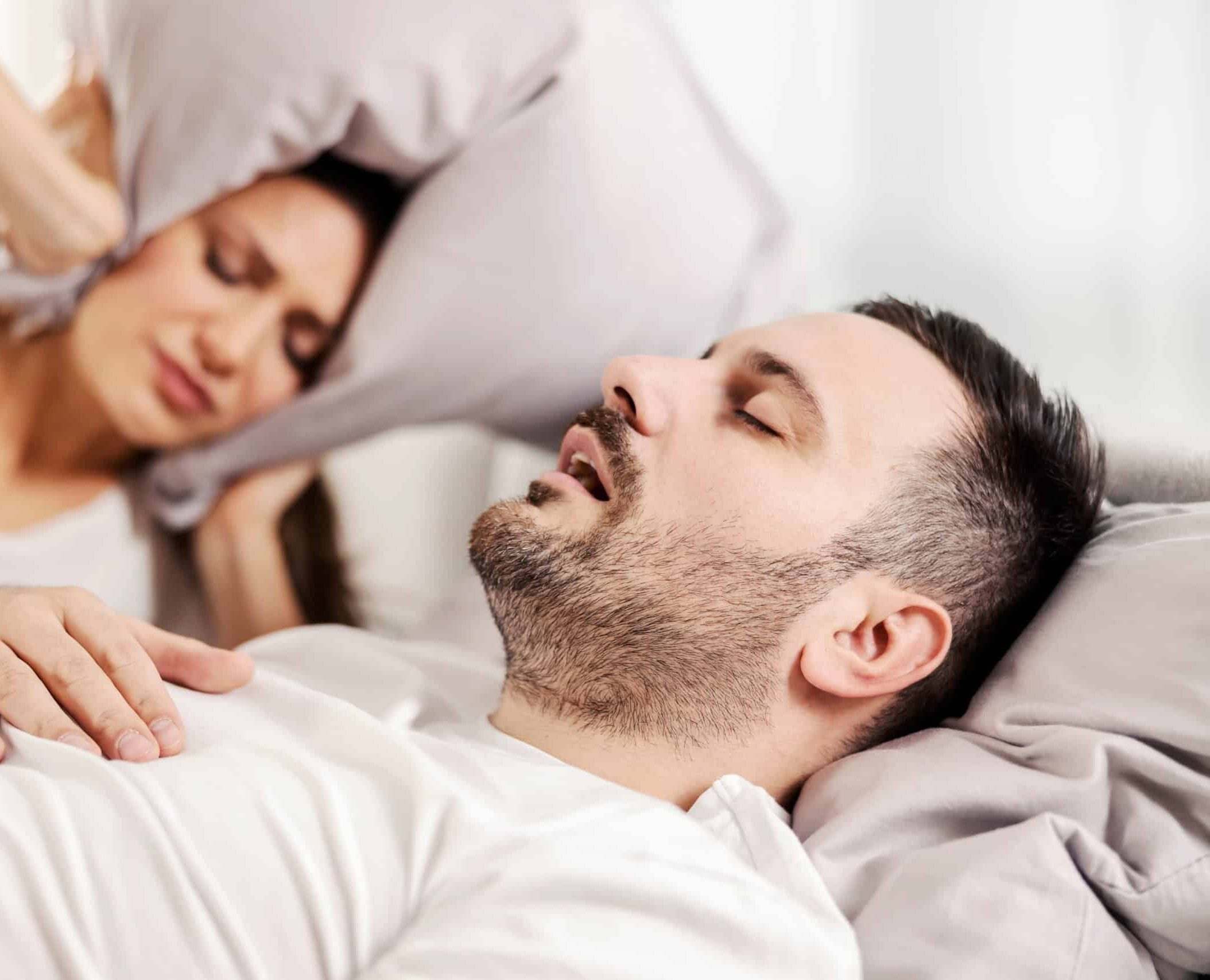
Common Signs & Symptoms Of Sleep Apnea
Sleep apnea often shows up through symptoms that patients may not immediately connect with breathing. A bed partner may notice pauses in breathing, gasping, or unusually loud snoring before the person experiencing them realizes there is a problem.
Common signs may include:
- Loud or persistent snoring that is interrupted by periods of silence.
- Waking suddenly while gasping, choking, or feeling short of breath.
- Morning headaches, dry mouth, or a sore throat.
- Difficulty concentrating or feeling mentally foggy during the day.
- Excessive daytime sleepiness despite spending enough time in bed.
- Irritability, mood changes, or reduced patience.
- Frequently waking during the night without a clear reason.
Because these symptoms can overlap with other medical conditions, evaluation and appropriate sleep testing are essential before treatment is recommended.

How Can A Dentist Help With Sleep Apnea?
Dentists are uniquely positioned to evaluate the relationship between the jaws, tongue, teeth, and airway. During an examination, we can look for oral signs that may be associated with sleep-disordered breathing, including tooth wear from grinding, a crowded tongue position, certain jaw relationships, or reports of chronic snoring and poor-quality sleep.
Champion Dental does not replace the role of a physician in diagnosing obstructive sleep apnea. Instead, dental care may become part of a coordinated treatment plan after a diagnosis has been made. For some patients, especially those with mild to moderate obstructive sleep apnea or those who cannot comfortably use CPAP therapy, a custom oral appliance may be recommended.
The goal is to provide treatment that is based on the patient’s specific anatomy, diagnosis, and needs rather than assuming one solution is appropriate for everyone.
Oral Appliance Therapy For Better Sleep
Oral appliance therapy uses a custom-made device worn while sleeping. Most sleep apnea appliances work by gently positioning the lower jaw slightly forward. This movement can help keep the tongue and soft tissues from collapsing backward and narrowing the airway.
A custom appliance is designed around the patient’s teeth and bite, which allows for greater precision than an over-the-counter device. Proper fit is important because an appliance must remain stable throughout the night while also being comfortable enough for consistent use.
Follow-up visits are an important part of treatment. We may assess how the appliance fits, whether jaw or bite changes are developing, and whether further adjustments are needed. Patients may also require follow-up sleep testing through their medical provider to confirm that breathing has improved.
What Is TMJ Disorder?
The temporomandibular joints, commonly called the TMJs, connect the lower jaw to the skull. These joints work together with muscles, ligaments, and the bite to allow the jaw to open, close, move side to side, and function during chewing and speaking.
TMJ disorder is a broad term used to describe problems involving these joints or the muscles that control them. Some patients experience occasional tightness, while others develop persistent jaw discomfort, limited movement, or symptoms that extend into the face, temples, neck, and ears.
Because the jaw is used constantly throughout the day, even a relatively small problem with joint movement or muscle tension can become noticeable quickly.

Common Causes Of Jaw Discomfort & TMJ Symptoms
There is rarely a single cause of TMJ symptoms. Jaw discomfort may develop from a combination of muscle overuse, joint inflammation, grinding, clenching, bite-related stress, or previous injury.
Possible contributing factors include:
- Frequent clenching during the day or while sleeping.
- Nighttime teeth grinding, also called bruxism.
- Arthritis or degenerative changes within the jaw joint.
- Previous trauma to the face or jaw.
- Excessive gum chewing or other repetitive jaw habits.
- Stress-related muscle tension.
- Changes in the way the upper and lower teeth come together.
Some patients also experience popping or clicking without discomfort. Joint sounds alone do not always indicate that treatment is necessary, which is why symptoms, function, and clinical findings should be considered together.

How Teeth Grinding Can Affect Your Jaw & Sleep
Bruxism places repeated pressure on the teeth, jaw joints, and chewing muscles. Some patients grind forcefully enough to flatten enamel, chip teeth, damage restorations, or create small fractures. Others primarily clench, creating prolonged muscle tension without obvious grinding sounds.
This activity can also affect sleep quality. A patient may wake with sore jaw muscles, temple headaches, facial tightness, or teeth that feel unusually sensitive. The discomfort may gradually improve during the day and return the following morning.
Teeth grinding can sometimes occur alongside sleep-disordered breathing. In certain patients, nighttime jaw activity may happen as the body responds to changes in the airway during sleep. For this reason, simply protecting the teeth without evaluating the broader sleep picture may not always address the entire concern.
Oral Appliances For TMJ Relief & Bruxism
A custom oral appliance may be recommended when grinding, clenching, or excessive muscle activity is contributing to jaw discomfort. Unlike generic nightguards, a professionally designed appliance is created specifically for the patient’s bite and treatment goals.
Depending on the situation, an appliance may help protect teeth from additional wear, reduce damaging contact between the upper and lower teeth, or alter how forces are distributed through the jaw.
It is important to distinguish between appliances designed for bruxism and those designed to treat obstructive sleep apnea. Although both may be worn at night, they serve different purposes and are not automatically interchangeable. Using the wrong type of device can fail to address the underlying problem and may sometimes aggravate jaw symptoms.
At Champion Dental, appliance recommendations are made only after evaluating the teeth, bite, joints, symptoms, and relevant sleep concerns.
When Should You Seek Treatment For Jaw Discomfort?
Occasional jaw soreness may resolve on its own, particularly after a period of unusual stress or overuse. Persistent or worsening symptoms deserve closer evaluation.
Consider scheduling an examination if you experience jaw discomfort that lasts for more than a few days, recurring headaches near the temples, difficulty opening your mouth normally, locking of the jaw, changes in your bite, or discomfort while chewing.
You should also seek care if you notice substantial tooth wear, unexplained cracks, or morning soreness that suggests nighttime grinding. Early evaluation can help identify contributing factors before tooth damage or joint irritation becomes more significant.
Patients in Farmers Branch, TX, do not need to wait until symptoms become severe to ask questions. Understanding the cause of recurring jaw discomfort is often the first step toward managing it more effectively.


Improving Sleep, Breathing, & Jaw Comfort
Sleep apnea, teeth grinding, and TMJ symptoms can overlap, but they are not the same condition. Effective care starts with identifying which factors are actually contributing to your symptoms.
For one patient, the primary concern may be airway obstruction during sleep. For another, it may be chronic muscle tension or bruxism. Some patients experience a combination of these issues and benefit from a treatment plan that considers both breathing and jaw function.
Our approach is centered on careful evaluation and appropriate coordination with medical providers when sleep apnea is suspected or already diagnosed. Rather than focusing only on a single symptom, we consider how the teeth, jaw joints, muscles, bite, and airway may be interacting.
Choose Champion Dental For Thoughtful Sleep & TMJ Care
Living with poor sleep or recurring jaw discomfort can gradually affect your energy, concentration, eating habits, and overall quality of life. Champion Dental provides a dental perspective on these concerns with an emphasis on careful evaluation, personalized treatment, and clear communication.
If oral appliance therapy is appropriate, we will explain why it may help, what the device is designed to accomplish, and what follow-up care is needed. If your symptoms suggest that additional medical evaluation is necessary, we can help you understand the next step rather than treating the problem in isolation.
Whether you are concerned about snoring, diagnosed sleep apnea, teeth grinding, jaw discomfort, or a combination of symptoms, Champion Dental can help you better understand your options and determine an appropriate path forward.